
Two months. That's how long I ran a color-coded Excel sheet ranking every Powerball number by how often it had turned up recently — red for cold, green for hot, updated by hand after every draw. By the end of it, the numbers I'd flagged green hit at almost the same rate as the ones flagged red. That's the whole problem with hot and cold number theory, and it's why so much of what gets marketed as AI-powered pattern recognition in lottery strategy circles is really just the same idea with better graphics and a subscription fee attached.
Testing three separate AI platforms since then taught me the same lesson from a different angle: frequency data only earns its keep when you use it to rule combinations out, not to rank which numbers are "due" next. Hot and cold number theory has its own internal logic (I go deeper on the mechanics of it elsewhere), but the short version for anyone still color-coding their own sheet is this. Recent frequency is noise until you've logged enough draws for it to average out, and by the time it's averaged out, it isn't hot anymore anyway.
The Hot Number Pattern Feels Real. The Data Says Otherwise.
Jarrod, the coworker who dragged me into the office Powerball pool in the first place, spends about as much time each week fine-tuning his fantasy football lineup as I spend on my spreadsheet, and he's usually the first person to poke a hole in my numbers, often over a lunch loop around Freedom Park near our office. When I showed him a run of hits from numbers my Excel sheet had flagged hot, he asked the obvious question: how many of those hits beat what he'd expect from picking at random? Not enough to matter, it turned out.
A receiver who scored big last week isn't more likely to score again out of some hidden law of streaks. He's more likely to see more targets, which is a real mechanism a coach controls. A lottery ball has no memory and no coach adjusting its targets. There's no equivalent mechanism underneath a "hot" number, so a streak is just a streak, with nothing structural keeping it going.
Why Does a Random Draw Ever Look Like a Pattern?
Vendors love to talk about their AI finding hidden structure in the draws, and there is structure worth watching, just not the kind being marketed. Over enough draws, results spread out fairly evenly across all 69 white balls and 26 red balls, which is just entropy doing what entropy does in a well-run random system. A short run of a few numbers repeating looks meaningful to a brain that's wired to spot patterns in six data points at a time, but it's completely unremarkable stretched across a few hundred draws.
Most of the platforms I've tested run some flavor of neural networks trained on the full draw history rather than last month's headlines, and the honest ones say plainly that they aren't predicting anything. They're filtering out combinations that are mathematically unlikely to appear at all, like three consecutive numbers in a row, which is a very different job than picking a winner.
What an AI Lottery Tool Actually Does Well: Pruning, Not Predicting
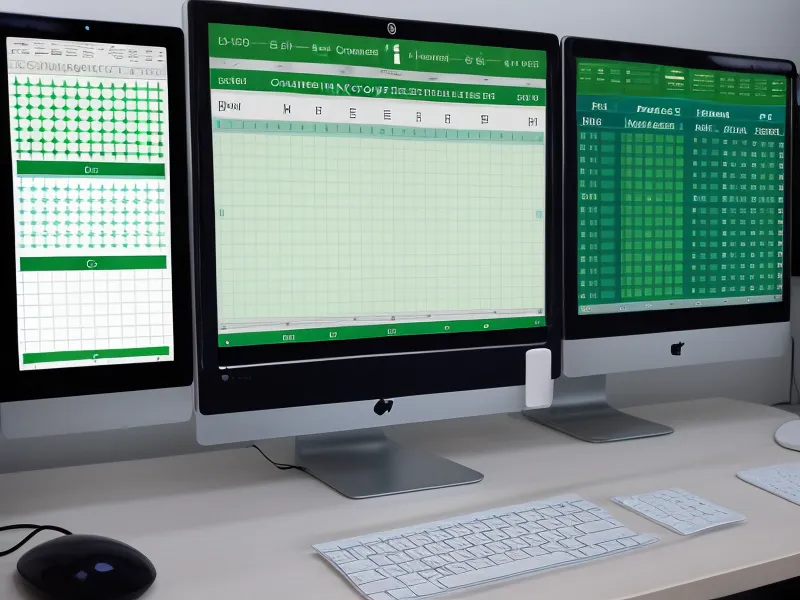
Pruning is the part that holds up under my own hit-rate tracking. A tool that throws out combinations with almost no chance of appearing (all-consecutive runs, all-single-digit sets, anything clustered in one narrow band) is doing something a plain manual spreadsheet can also do, just slower. I get into the actual hit-rate math in the spreadsheet that doesn't lie, including how a tool's picks stack up against a plain random baseline over a long stretch of draws, so I won't repeat the whole ledger here.
What I will say is that backtesting a platform's claims against years of past draws, before trusting one live week of picks, is the difference between judging a tool fairly and getting fooled by a lucky run. It's the one habit that separates a spreadsheet nerd's tracking from a marketing page's cherry-picked screenshot.
Ask the Tool for Its Tracking Window Before You Trust a Hot-Number Claim
Here's the actual test I use now, and it's the one thing worth stealing from my process: before trusting any claim about a hot or cold number, ask what window the tool is measuring. The last twenty draws? The last hundred? Everything since the game's current matrix started? A number that looks hot over twenty draws is almost always just noise, and a platform that won't state its window size at all is a platform that doesn't want anyone checking its work. That single question has done more for my results than any weighted-average formula I've ever built.
None of this means every tool is worthless, or that manual tracking is dead on arrival. I've picked apart the raw frequency math on its own in another post, argued about how much extra ticket coverage a wheeling system actually buys you, and written up the specific red flags that tell me a platform is more marketing than math. Powerball and Mega Millions run different matrices, so a tool tuned for one game's numbers doesn't automatically transfer to the other, which trips up more readers than you'd think. Whether quick-pick settings can even be optimized in a meaningful way is a question I get asked constantly and it deserves its own answer rather than a footnote here. And whether a paid subscription is worth it usually comes down to plain arithmetic: total cost of play against what the small prizes actually cover, which is its own accounting exercise I keep meaning to simplify.

Where the Spreadsheet Still Earns Its Keep
A reader named Trey emailed me after one of my first tool reviews to describe his own attempt at logging draws by hand in a notebook, and he still checks in every few months with an update on whether the AI picks are doing anything for him. My answer is usually close to his: a little, not much, and never enough to change the math on whether this is a good use of anyone's money.
Jarrod thinks I take the whole thing too far (he's not wrong), but building a weekly routine around the same two draw nights is the only reason my spreadsheet has enough rows to say anything credible at all. My wife usually doesn't look twice at any of it, except for the one Saturday I taped a side-by-side comparison sheet to the fridge, actual numbers next to what three tools had predicted, and she stopped mid-step on her way to the coffee maker to read the whole thing before saying a word.
None of that changes the actual math. Powerball is still a negative-expected-value game, and no amount of pruning, weighted averages, or fridge comparison sheets turns it into an investment. What the tracking does change is how I spend the two dollars: on lines that have already survived a basic sanity check instead of ones a human picked because a number felt lucky that day. That's a smaller claim than most of these tools make for themselves, and it's the only one I can actually back up with two years of rows in a spreadsheet.
The information on this site is based on personal experience and research for informational purposes only. It is not a substitute for professional medical, financial, or legal advice. Always consult a qualified professional before making decisions that affect your health or finances.