
My master tracking sheet has thirty-one tabs, one for every stretch of weeks I've run an AI lottery strategy tool's picks against the actual Powerball draw. It's the kind of detail that turns a data-analyst hobby into something my wife brings up at dinner, usually right before asking why I need thirty-one tabs for a game I keep losing anyway.
Quick disclosure before the numbers: some links below are affiliate links, meaning I earn a commission if you buy through them, at no extra cost to you. I've tracked every tool named here against real draws in my own spreadsheet for the last six months. I'm not a mathematician, not a gambling advisor, and definitely not a lottery insider. I'm just someone who likes a clean pivot table more than the average person should. This is a game with a negative expected value no matter which tool you use, so treat everything here as entertainment, not a financial plan.
A $50-a-Week Office Pool and the Spreadsheet It Created
Five of us from the office chipped in every Monday, Wednesday, and Saturday for a stack of Quick Picks, and watching roughly $50 a week disappear into a random walk of numbers started to bother me more than it probably should have. The odds of winning any prize in Powerball sit around 1 in 24.87, which I already knew, but I wanted to at least stop playing numbers that hadn't shown up in months.
Before any of that, I'd tried downloading a random number generator app from the App Store, thinking it would do something smarter than my own gut. It just produced the same kind of noise I could get from flipping a coin, so I dropped it inside a week and went looking for something with actual history behind it.
Building that Excel sheet meant tracking frequency across the 69 white balls and the 26 red balls, trying to apply the Law of Large Numbers to spot anything that looked like a real deviation. A friend of mine mentioned his garage IPA hobby over lunch at 7th Street Public Market around that time. He brews all summer and swears the only variable he can't control is fermentation temperature, and it made me realize my own project had zero controllable variables while I was still treating it like a real experiment. Manual entry was also slower than I wanted and kept missing the deeper historical context a spreadsheet alone couldn't give me, which is what eventually pushed me toward dedicated AI lottery platforms.
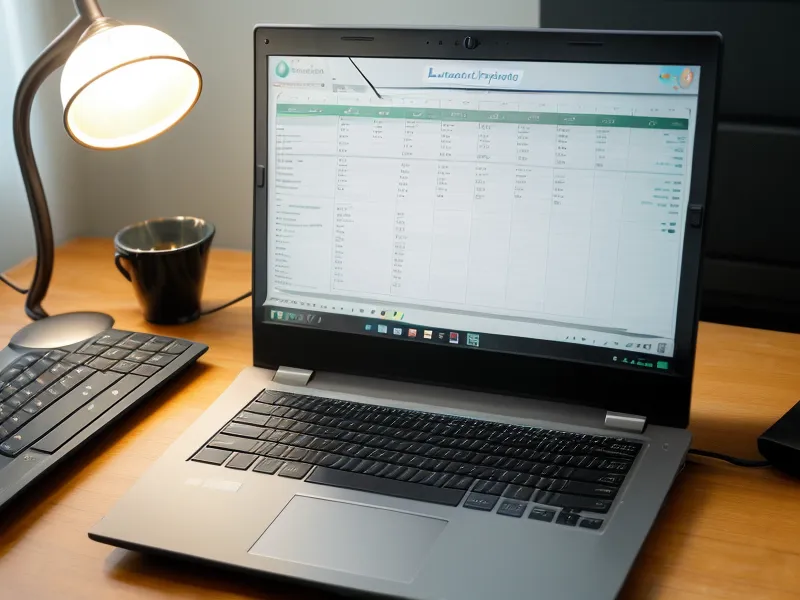
LottoChamp's Database Saved Me From Redoing Work That Already Existed
LottoChamp was the first tool I actually paid for. Early on I lost the better part of an afternoon trying to scrape historical draw data from a state website that kept timing out, only to find LottoChamp already had every draw indexed and ready to query. That stung a little for someone who prides himself on collecting his own data, but I got over it fast. I started feeding my spreadsheet numbers into it in late February to see whether our outputs actually matched up, and for the most part they did.
The interface still looks like a legacy Windows 95 program, and I won't pretend otherwise. What matters more is the frequency analysis underneath it. The actual draw-frequency math isn't especially exotic once you've seen it laid out, and I've covered how it works in more detail somewhere else, so I won't repeat it here. What LottoChamp showed me was that several numbers my coworkers kept "feeling" hadn't come up in over forty draws, about as cold as a number gets without being retired outright. Its 60-day money-back guarantee gave me enough room to run LottoChamp through roughly 25 draws before deciding it earned a permanent spot in my routine, and I documented exactly how I checked its numbers against mine in how I built a master spreadsheet to audit my AI lottery predictions.
More Variables Made My Hit Rate Worse, Not Better
Around early June I started noticing the same pattern across every AI tool I tried: the more elaborate the model, the less it seemed to generalize past the draws it had already seen. In plain terms, if a tool tries too hard to find a "perfect" pattern in six months of history, it's usually just finding coincidences that won't repeat. That's overfitting, and it's the main reason I stopped trusting any tool that promised something too clean.
My hit rate actually dropped when I leaned on the more complicated wheeling setups, which was disappointing given how much time I'd sunk into learning them. Adding more variables to a random system mostly just means you're chasing ghosts with better software. What worked instead was using these tools as filters, cutting out combinations that were statistically unlikely rather than hunting for one "correct" set. I've since put together a longer checklist of credibility red flags worth watching for in lottery software marketing, and a separate breakdown of how I actually backtest a tool's picks against real draws, since both are bigger topics than a paragraph can hold.

Lottery Defeated vs. Lotto Master Key: Two Very Different Bets
While LottoChamp got most of my attention, I split real time between Lottery Defeated and Lotto Master Key to see how they'd hold up against the same six months of draws. Lottery Defeated covers both Powerball and Mega Millions through separate modules, and I logged every suggested pick against what actually dropped each week. It has an active user community, which is fun if you like swapping strategies, but for someone who wants numbers instead of opinions, the community chatter mostly felt like noise. It also costs more than LottoChamp, and I found its frequency tools less intuitive than LottoChamp's indexing. Whether that ongoing cost is worth the extra data is its own calculation, one I've run in more detail in a separate post, but for my routine LottoChamp's one-time setup won out.
Lotto Master Key sits at the other end. I first looked at it because of some conversion numbers I found online, a 1.66% conversion rate and an EPC of $1.81, which suggested people who try it tend to stick around. It's a simpler system, and after about four months of testing, I found its frequency analysis flagged "cold" numbers I'd been stubbornly playing for months without noticing. It's a reasonable entry point into using lottery wheeling systems with AI without the size of LottoChamp's full database. Whether that counts as quick-pick optimization or just avoiding obviously dead numbers is a finer distinction than most reviews bother making, and the matrix differences between Powerball and Mega Millions change how any of these models behave under the hood, enough that I treat a tool's Mega Millions picks and its Powerball picks as two separate track records, not one.
Watching the Confidence Score Climb by Week Five
By week five of logging LottoChamp's picks against the actual draws, one cluster's confidence score had climbed higher than anything I'd tracked before. I remember the specific feel of hitting tab down that comparison column, one cell at a time, and watching the number land higher than it ever had on a Saturday refresh. For about ten minutes I let myself believe the spreadsheet had found something real. It hadn't, not in any way that held up over the following weeks, but that spike is the closest I've come to understanding why people get hooked on this stuff.
Kelsey, someone I met at a Charlotte data meetup after she asked about my tracking template, always pushes back on moments like that. She asks harder questions about sample size than most people who bother reading these reviews, and she's usually right to. Hit-rate tracking over five weeks tells you almost nothing on its own; it needs a comparison against a random baseline before it means anything, which is a bigger topic than fits here. What I can say is that LottoChamp filtering has replaced the blind Quick Picks from the office pool, turning a mindless $50-a-week habit into something closer to a structured routine, for better or worse. Anyone who wants the full six-month log, week by week, can find it in my half-year experiment tracking AI patterns.

Is Any AI Lottery Strategy Worth Paying For?
After six months of tracking, my answer is boring but honest: no tool hands you a magic button, but as data aggregators that save hours of manual work, they're worth the money for someone who was already going to build a spreadsheet anyway. This is about as close as I get to a lottery software review after six months of Powerball data analysis, tab by tab. LottoChamp remains the one I'd recommend first, mainly because of the depth of its indexed database and a 60-day guarantee that makes it the lowest-risk way to test the whole idea yourself.
None of this replaces keeping your own numbers. The tradeoff between building everything by hand and letting a tool run the analysis is a bigger question than one article can settle, and so is totaling the real cost of play against what these subscriptions charge. I've broken both down in more detail elsewhere, and they're worth reading before you spend a dollar. For deep historical analysis across states, LottoChamp is still what I reach for. If you want something simpler to start with, Lotto Master Key is the more approachable entry point. My wife still thinks the whole project is excessive. For the first time in two years of doing this, though, I feel like I'm playing on my own terms instead of just hoping.
LottoChamp
Pros
- ✓ Massive historical database that saves hours of manual scraping
- ✓ AI pattern detection that identifies statistically 'cold' numbers
- ✓ 60-day money-back guarantee allows for a full two-month audit
- ✓ Covers multiple state and national lotteries beyond just Powerball
Cons
- − User interface feels a bit like a legacy Windows 95 application
- − Higher initial price point than budget alternatives
The information on this site is based on personal experience and research for informational purposes only. It is not a substitute for professional medical, financial, or legal advice. Always consult a qualified professional before making decisions that affect your health or finances.