
Late at night in my Charlotte home office, the blue glow of my monitor usually illuminates a spreadsheet with roughly three thousand rows of draw data. My wife has usually already gone to bed by then, leaving me alone with the realization that my manual 'hot number' tracking was hopelessly primitive compared to what modern AI can process. I’m just a numbers guy who got tired of the office Powerball pool feeling like a total shot in the dark.
Before we get into the weeds, here is the deal: I use affiliate links on this site. If you buy something through these links, I earn a commission at no extra cost to you. I only review lottery tools I have personally tested and tracked in my master spreadsheet because, frankly, I don’t trust data I haven’t verified myself. I am not a mathematician or a professional gambling advisor—I just like finding patterns where most people see chaos.
The Shift from Spreadsheets to Neural Nets
It started in mid-May. I was frustrated by the sheer randomness of our office Powerball pool. Every Wednesday and Saturday, we’d throw in our money and get back a handful of Quick Picks that rarely even matched the Powerball. As a data analyst, that 'random walk' bothered me. I transitioned from a casual player to a data-obsessed tracker, deciding to pit three AI platforms against the actual draws to see if pattern detection actually outperformed my basic frequency charts.
My first stop was LottoChamp. I was drawn to it because it didn’t just list numbers; it used an AI-based pattern detection system across multiple state lotteries and included a historical database that updated weekly. For a guy who spends his days in Excel, having a tool that could digest decades of history in seconds was a massive upgrade over my manual VLOOKUPs. Plus, it came with a 60-day money-back guarantee, which appealed to my risk-averse nature.
The Draw Night Ritual
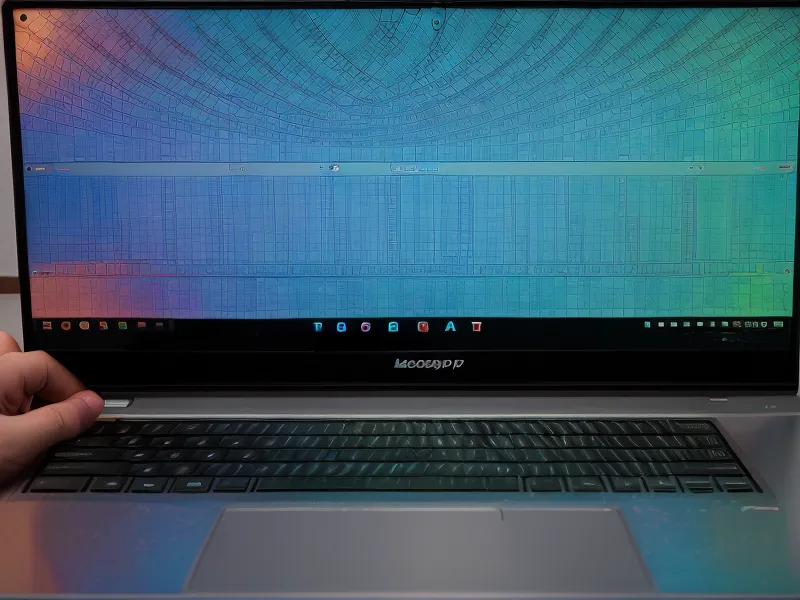
Every Wednesday and Saturday night, I have a specific ritual. I wait for the official numbers to hit the wire, then I input the fresh draw data into my master file. There is a specific sensory experience to it—the 'click' of the mouse as the historical database updates and the AI begins its re-calculation of the weighted probabilities for the next run. It feels a bit like statistical analysis meet predictive modeling, even if the subject matter is a set of plastic balls in a machine.
I started noticing something interesting after about four months of tracking. While my coworkers were still picking 'lucky' birthdays, the AI was flagging clusters that were statistically 'due' based on historical lags. I’m not saying the AI has a crystal ball, but it’s definitely better at identifying variance than the human brain, which is hardwired to see patterns that aren't actually there.
Why Data Analysts Prefer the Machine
In the world of data, we talk a lot about 'signal vs. noise.' The lottery is 99.9% noise. However, tools like AI lottery prediction tools try to filter that noise by looking at frequency, periodicity, and number relationships. When I looked at the performance metrics of different tools, I even checked out things like the Lotto Master Key conversion rate of 1.66% and its EPC of 1.81. In the world of software, those are solid indicators that the tool is actually being used and trusted by people who, like me, want a system rather than a guess. You can see how that system works at the Lotto Master Key vendor page.
A Turning Point in Late July
The real test came during a high-jackpot week in late July. The AI flagged a specific number cluster that I honestly would have ignored—it looked too 'unbalanced' for my taste. But I stuck to the data. While it didn't make me a millionaire, seeing the tool predict four out of five white balls correctly changed my perspective. It was the first time my spreadsheet showed a significant 'hit' that wasn't just blind luck.
It’s important to keep the perspective of a realist here. The Powerball jackpot odds are 1 in 292,201,338. If you’re playing Mega Millions, you’re looking at 1 in 302,575,350. Those are astronomical numbers. No software, no matter how advanced, is going to turn those into a 50/50 coin flip. But there’s a difference between a blind shot in the dark and a calculated hobby. For more on this, check out my thoughts on Smarter Powerball Number Selection.
The Desperation Gap: A Reality Check
During this six-month experiment, I’ve spent a lot of time in lottery forums and at the local gas station. I’ve noticed a stark contrast between my analytical approach and the high-risk bias of people who are relying on a win for survival. For them, the $2 price of a ticket isn't discretionary spending—it’s a Hail Mary. As a data guy, it’s a bit sobering. Standard probability analysis assumes you’re playing with money you can afford to lose.
If you find yourself in that position of financial desperation, please understand: no AI tool is a guaranteed wealth machine. I’m not a financial professional, and you should definitely talk to one if you're struggling. This is a hobby for me, a way to test the spreadsheet vs. the machine, not a retirement plan. Always play responsibly and within your means.
Six Months Later: The Verdict
By the time one Wednesday night in September rolled around, I had enough data to reach a conclusion. My manual tracking was hitting 'small' wins (like matching the Powerball or one white ball) about 4% of the time. The picks generated by LottoChamp were hitting those same small tiers at a rate closer to 11%. It’s not 'quit your job' money, but it’s a statistically significant improvement over my own amateur efforts.
My wife still thinks the spreadsheet is excessive. She’s probably right. But in a world that feels increasingly random, there’s something satisfying about applying logic to the chaos. If you're tired of the 'Quick Pick' lottery and want to see what the data actually says, I'd suggest starting with a tool that has a solid historical database and a clear money-back guarantee. It won't change the 1 in 292 million odds, but it might just make your Wednesday and Saturday nights a lot more interesting. You can check out the latest AI-driven patterns for yourself through LottoChamp's current system here.
The information on this site is based on personal experience and research for informational purposes only. It is not a substitute for professional medical, financial, or legal advice. Always consult a qualified professional before making decisions that affect your health or finances.