
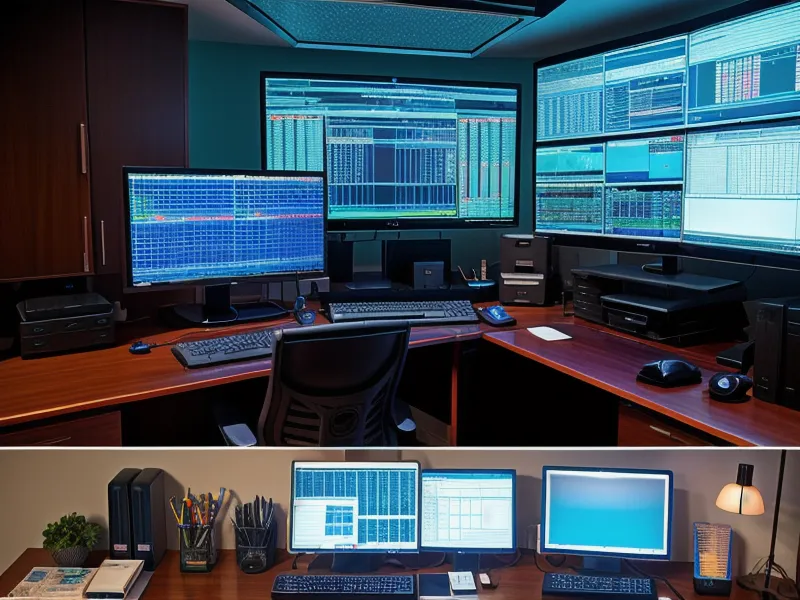
Late one Saturday night in Charlotte, I found myself staring at a pivot table while my wife slept. The blue light of two monitors reflected off my glasses, the only illumination in the room besides the dim glow of the hallway light. On a muted browser tab, the official Powerball draw animation played out its familiar, bouncing choreography. I watched the white balls—ranging from 1 to 69—tumble through the air, followed by that single red ball chosen from a pool of 1 to 26.
I wasn't looking for a miracle. I was looking for a hit. Specifically, I was looking for one of the 'high-probability' sequences suggested by the third AI lottery platform I’d been testing. As the final number settled, I realized the AI’s picks were just as cold as the random numbers my office pool picks up at the gas station. It was another zero-sum night in a six-month experiment that has turned my home office into a repository of lottery data that my wife, quite rightly, finds excessive.
From Office Pools to Neural Networks
It started innocently enough. Like many people in corporate data roles, I got roped into the weekly office lottery pool. We’d all chip in a few bucks, someone would buy a stack of $2 tickets, and we’d spend Monday, Wednesday, and Saturday mornings joking about how we’d quit our jobs. But as a data analyst, the sheer randomness of it started to itch. The law of large numbers tells us that over millions of draws, everything evens out, but the odds of winning the jackpot are a staggering 1 in 292.2 million. It’s a number so large it’s practically abstract.
I started tracking our office picks in a basic Excel sheet, just to see how often we were even hitting two numbers. That was the gateway drug. By one Wednesday night in March, I had moved past simple frequency tracking and into the rabbit hole of AI-based lottery analysis tools. I wanted to see if modern machine learning—specifically neural networks that claim to identify patterns in historical draws—could actually outperform a random number generator.

I’m not a mathematician, and I certainly don't have a background in professional gambling or financial advising. I’m just a guy who spends forty hours a week cleaning messy datasets and building dashboards. If there was a pattern to be found in the 5/69 plus 1/26 matrix of the Powerball, I figured these AI tools were the best bet to find it. I committed to a six-month tracking period, logging every suggested pick against the actual draws in a master spreadsheet that eventually grew to fifteen tabs.
The Three-Platform Experiment (Early Spring to Mid-June)
I selected three different platforms to test. One focused on 'hot and cold' numbers, another used a proprietary neural network to 'predict' the next draw based on the last decade of data, and the third used a 'wheeling system' optimized by an algorithm. Every Sunday and Thursday, I would log in, generate the suggested sequences for the upcoming draws, and paste them into my audit sheet.
By mid-June, I had a solid three months of data. The process was ritualistic. I’d sit down with my coffee, pull up the draw results, and run a VLOOKUP to see if any of the AI picks matched. My wife would walk into the home office, see the 15th tab of my Excel workbook with its color-coded heat maps, and just sigh before quietly closing the door. She’s seen me get obsessed with fantasy football stats before, but this was a new level of data hoarding.
What I found during this first phase was enlightening, though not in the way I’d hoped. The AI tools were incredibly good at identifying past clusters. They could tell me with 100% accuracy that the number 23 had appeared more than average in the last fifty draws. But as any analyst will tell you, backtesting is the easy part. Predicting the next point in the time series is where the wheels usually fall off.
The Audit: When Data Meets Physical Reality
After about three months of logging, I noticed a recurring theme. The AI models were heavily weighted toward 'overdue' numbers—the idea that if a number hasn't appeared in a while, it’s 'due' to hit. This is a classic gambler's fallacy, but the AI tools dressed it up in sophisticated language about 'mean reversion.' In reality, the ball machine doesn't have a memory. The gravity-fed mixing chamber doesn't know that the 42 ball hasn't been out for a stroll in three weeks.
During a mid-summer audit, I had a bit of a turning point. I realized that while the AI could identify past clusters, it consistently failed to account for the physical entropy of the ball machines. These are mechanical systems. While they are designed to be as close to perfectly random as possible, they are subject to physical bias—microscopic differences in ball weight, the wear on the agitator, even the humidity in the room in Florida where the draws take place.
Most AI lottery tools treat the numbers as pure data points in a vacuum. But the lottery isn't just data; it's a physical event. I started to suspect that focusing on high-frequency historical patterns might actually be decreasing the win probability. If an AI tells you to play a 'hot' number because it’s appeared 10% more often than others, it might be chasing a mechanical bias that the lottery officials have already corrected by swapping in a new ball set.
Why Frequency Tracking Might Actually Hurt Your Odds
This brings me to the most contrarian realization of my six-month experiment. Most people think that by using AI to find 'patterns,' they are narrowing the field. In reality, they might just be narrowing their own perspective. Because the Powerball draws occur 3 times per week, the sample size for any given year is relatively small—only about 156 draws. In the world of data science, that’s a tiny dataset. Attempting to train a complex neural network on 156 points is like trying to predict the weather for the next decade based on what happened last Tuesday.
By late August, my spreadsheet showed that the 'random' picks from the office pool actually had a slightly higher hit rate for small prizes (like matching the Powerball alone) than the 'optimized' sequences from two of the three AI platforms. The AI tools were so busy trying to find a signal in the noise that they often missed the fact that the noise *is* the signal. If you're interested in how these tools attempt to bridge that gap, I previously wrote about tracking the patterns in my six-month dive into AI lottery prediction tools, where I break down the specific hit rates of the different algorithms.
The danger of these tools isn't that they are scams—most of the ones I tested did exactly what they said they would: they analyzed data and provided picks based on that analysis. The danger is the false sense of certainty they provide. When a software tells you a number has a '94% probability' of appearing, it’s easy to forget that the physical reality of the draw remains unchanged. The odds are still 1 in 292.2 million for that jackpot, regardless of what the spreadsheet says.
Closing the Master Spreadsheet
As I closed the spreadsheet for the season in late August, I didn't have a jackpot to show for it. I did, however, have a much clearer understanding of the limits of AI in high-entropy environments. The analysis effectively debunked the 'overdue number' myth for me once and for all. If anything, my six-month dive into AI lottery prediction tools taught me that the most valuable part of the process isn't the numbers themselves, but the discipline of tracking the data honestly.
I still play the Powerball casually with my coworkers. I still put in my $2 for the Monday, Wednesday, and Saturday draws. But I no longer spend hours tweaking the weights on a neural network model. I’ve realized that while AI is great for predicting consumer behavior or analyzing stock trends, it meets its match in a plastic drum filled with numbered rubber balls. The lottery is entertainment, a low-stakes way to dream for a few days, and it should be treated as such. It’s a game of chance with negative expected value, and no amount of data cleaning will change the fundamental math.
If you decide to go down this rabbit hole yourself, keep your expectations grounded. I have zero mathematical training beyond what’s required for my day job, and I’m certainly not a gambling expert. Always remember to treat this as a hobby, not a financial strategy. If you find yourself spending more than you can afford or getting more stressed than excited about the draws, check with a professional or talk to someone who can help keep things in perspective. For now, my master spreadsheet is archived. My wife is happy to have the 'excessive' tabs out of sight, and I’m happy to just be the guy who brings the printout to the office on Monday morning.
The information on this site is based on personal experience and research for informational purposes only. It is not a substitute for professional medical, financial, or legal advice. Always consult a qualified professional before making decisions that affect your health or finances.