
My Lottery Defeated dashboard has a tab labeled "Overdue Numbers" that I check more often than my own retirement account. It's one of several AI lottery tools sitting open in my browser most nights, and it's the tab that pushed me to ask a blunter question than whether the software works: does a subscription price like this actually buy better data, or just a nicer coat of paint on the same frequency chart I could build myself.
Quick disclosure before anything else: some of the links below are affiliate links, and I earn a commission if you buy through them, at no extra cost to you. I only write about tools I've personally paid for and run through my own tracking sheet, because a review with no receipts behind it isn't worth much. None of this is financial advice, and I'm not a lottery insider — I'm a data analyst who got curious about whether these tools behave any differently from a spreadsheet with better marketing.
Here's the misconception I want to knock down: that a higher subscription price signals a sharper edge on the numbers. It doesn't. Lottery Defeated and its closest competitors all pull from the same public draw history, and no amount of software polish changes what a Wednesday or Saturday drawing actually produces. What the price tag buys, or fails to buy, is time, organization, and a handful of features that either fit how you play or don't.
What $197 Actually Buys You With an AI Lottery Tool Like Lottery Defeated
Lottery Defeated runs primarily on frequency analysis, flagging numbers that show up more than expected ("hot") and numbers that haven't shown up in a while ("overdue"). I built my own manual tracking system before I ever paid for a subscription, and I still run it alongside every tool I test, mostly out of stubbornness. Comparing the two taught me something about variance that no amount of reading could: short stretches of results swing around so much that a handful of weeks of "good" or "bad" picks tell you almost nothing about whether a method works.
Where Manual Tracking Still Beats the Software (and Where It Doesn't)
The "overdue number" logic leans hard on the Gambler's Fallacy — the idea that a number is somehow due because it hasn't hit recently, when each draw is independent of the last. The software doesn't pretend otherwise in its own documentation, to its credit. What it does well is automate a few hours of data entry a week, pulling and organizing results instead of leaving that job to me and a stack of past drawing sheets. I've written elsewhere about whether AI lottery tools actually find patterns or just noise, and the short version is that a lot of what looks like a pattern is software finding structure in what's still randomness.
Before I trusted any tool, I tried the cheap option: I stuck to nothing but Quick Picks for an entire quarter, on the theory that pure randomness paired with volume would even out in my favor over time. It didn't do anything special. My results over that stretch looked about the same as everyone else's in the office pool, which told me that "more random" isn't a strategy so much as an absence of one.
A friend of mine, Stephen Yoo, met me at Optimist Hall a few weeks back and had his phone out comparing draw numbers before I'd even sat down. Stephen tracks everything by hand in his own system and insists his methodology is more rigorous than mine, which is a funny thing to argue about over lunch, but it's a useful reminder: there isn't one correct way to log this stuff, paid tool or not. Two careful trackers can look at the same set of draws and walk away weighing different things.
The comparison sheet I keep ended up taped to our fridge for a while, half by accident, and my wife stopped mid-stride one morning to actually read the numbers instead of giving it the usual eye-roll. That wasn't a breakthrough so much as a small, mildly alarming sign that the hobby had gotten visible enough to interrupt someone's coffee routine.
The Actual Math: Spend, Wins, and Where the Subscription Fits
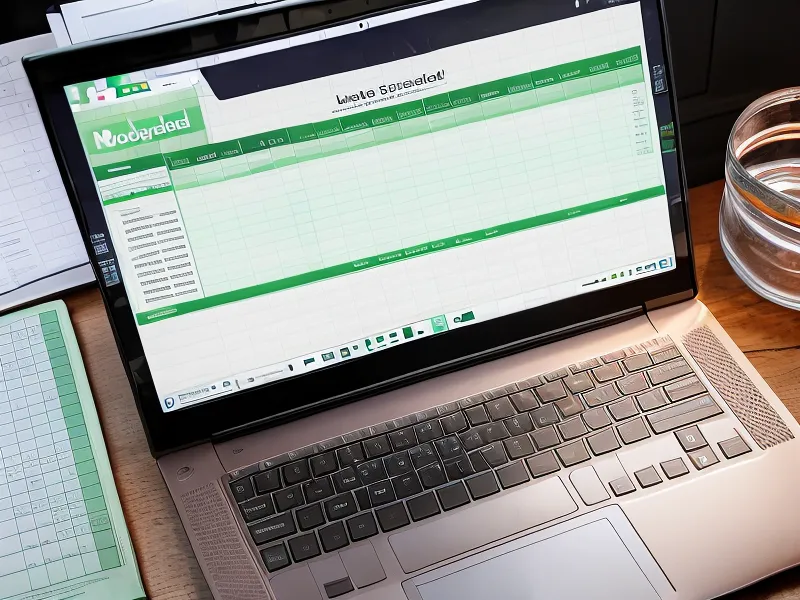
Most of that math happens after dark, back when the monitors are still humming themselves awake before the draw results even finish loading. Running the numbers from my own tracking sheet, total ticket spend sits around $400 for the stretch I'm counting, playing five lines a draw; the Lottery Defeated subscription itself runs $197; total "small" wins, mostly two-number matches and Powerball-only hits, add up to about $112; and net position comes out to roughly $485 in the red. On its own that reads like a straightforward loss, because it is one. What I also track is near-miss frequency, and picks generated by Lottery Defeated and LottoChamp matched at least one or two numbers noticeably more often than the office pool's unlogged Quick Picks. That's not the same as beating the odds. It's closer to narrowing how often a ticket buys you nothing at all.
Lottery Defeated or LottoChamp: Which One Earns Its Subscription Fee?
Lottery Defeated has an active community, and there's a real upside to that: watching what other players are tracking makes the whole exercise feel less like shouting into a void. The interface, though, feels dated next to newer options, and the learning curve on the dashboard is steeper than it needs to be. LottoChamp is the tool I currently point people toward first, mainly because its historical database updates automatically and its pattern detection covers multiple state lotteries rather than just the two big multi-state games. I've dug further into the pattern recognition tools both platforms use, and the gap shows up more in usability than in prediction claims.
LottoChamp also runs about $50 cheaper than Lottery Defeated, which sounds small until you count it in tickets instead of dollars. That's roughly 25 more Powerball plays for the same budget. That gap between LottoChamp and Lottery Defeated shows up more in day-to-day usability than in raw accuracy, and I've written up the best features of LottoChamp for data analysts in more detail elsewhere, including a 60-day money-back guarantee Lottery Defeated doesn't advertise nearly as hard. One tradeoff worth knowing: LottoChamp is browser-only, with no dedicated mobile app, so if you're the type who checks numbers standing in line at a store, that's a real limitation.
Is There a Cheaper Way In?
For readers who balk at $150 to $200 for lottery software, Lotto Master Key is the option I usually mention next. It skips the deep historical database and heavier dashboard in favor of a simpler system that converts raw draw data into plain suggestions. It's a reasonable fit for someone who wants a better-than-random Quick Pick without spending a weekend learning to read a heat map, though the tradeoff is a smaller dataset behind each suggestion and less frequent updates than the pricier tools.
A few related topics I'm deliberately leaving out of this one, because I've covered them elsewhere in more depth: the mechanics of draw-frequency analysis, how I track hit rates over time in my own sheet, the long-running hot-and-cold-number debate, whether a Quick Pick can be meaningfully optimized at all, the general tradeoff between running a spreadsheet yourself and paying a tool to do it, how a wheeling system spreads your numbers across more combinations, the red flags that separate a serious lottery tool from marketing dressed up as software, why Powerball and Mega Millions call for slightly different approaches given their different number matrices, how I backtest a tool's suggestions against past draws, what a plain random-number baseline looks like next to any of these tools, and the full accounting of what playing the lottery actually costs over time. This piece stays narrower than that: is the sticker price on Lottery Defeated worth what actually shows up in the data.
A Reader Cross-Checked My Numbers, and I'm Glad She Did
One reader, Adanna Ezike, left a long comment a while back lining up her own Mega Millions tracking against numbers I'd posted, matching them line by line against her own platform's output. They didn't line up perfectly, and that reassured me more than it worried me. If two independent trackers agreed on everything down to the digit, I'd assume one of us copied the other's homework instead of doing the tracking ourselves.
The Part Where I Remind You This Is Entertainment, Not an Investment
None of this changes the basic math of the lottery: it's a game with negative expected value, and no subscription, spreadsheet, or dashboard changes that. I have no professional training in statistics, and nothing here counts as financial advice. Treat the output the way you'd treat a weekend weather forecast, useful for planning, not a guarantee about what actually happens once the numbers get pulled. There have been stretches where the "hot" numbers on every tool I tested went cold for weeks in a row, and the data simply didn't cooperate with anyone's theory. That's probability doing what probability does, regardless of which dashboard you're staring at when it happens.
So, Is the Subscription Worth It?
Skip the question of which tool "wins," because none of them win against the actual odds. Ask instead whether it saves you real time, whether it covers the specific games you play, whether there's a refund window if it doesn't fit, and whether the price is money you'd already set aside for a hobby rather than money earmarked for rent. Judged that way, LottoChamp earns its keep for me: better historical depth, a cleaner dashboard, and $50 less out of pocket than Lottery Defeated for a comparable feature set. Lottery Defeated still makes sense if the community aspect and its Powerball-and-Mega-Millions-specific modules matter more to you than interface polish. And if $150 to $200 is simply more than you want to spend on a hobby, Lotto Master Key gets you a simpler, cheaper way to stop guessing blind.
These tools won't change the odds printed on the back of your ticket, and I'd be lying if I said my spreadsheet has paid for itself in winnings. What it's changed is how deliberately I play. Less flailing, more structure, and a clearer sense of when a loss is just variance instead of a sign I'm doing something wrong. That's a strange thing to pay a subscription for, but for a data analyst with a slightly excessive hobby, it's held up as worth the price so far.
The information on this site is based on personal experience and research for informational purposes only. It is not a substitute for professional medical, financial, or legal advice. Always consult a qualified professional before making decisions that affect your health or finances.